
Launching a new website is exciting. You’ve invested time, money, and effort into getting it live, so it’s natural to expect quick visibility in Google. But in reality, SEO rarely delivers instant results—especially for new sites.
If you’ve been told it can take months before SEO gains traction, you might be wondering why. In 2026, the answer goes beyond traditional rankings. Search engines are now powered by AI, entity understanding, and trust signals that take time to establish.
Let’s break down what’s really happening behind the scenes.
Google’s AI-driven algorithms are designed to surface reliable, authoritative, and genuinely helpful content. When a website is new, it lacks an established reputation, making it harder to compete with trusted brands.
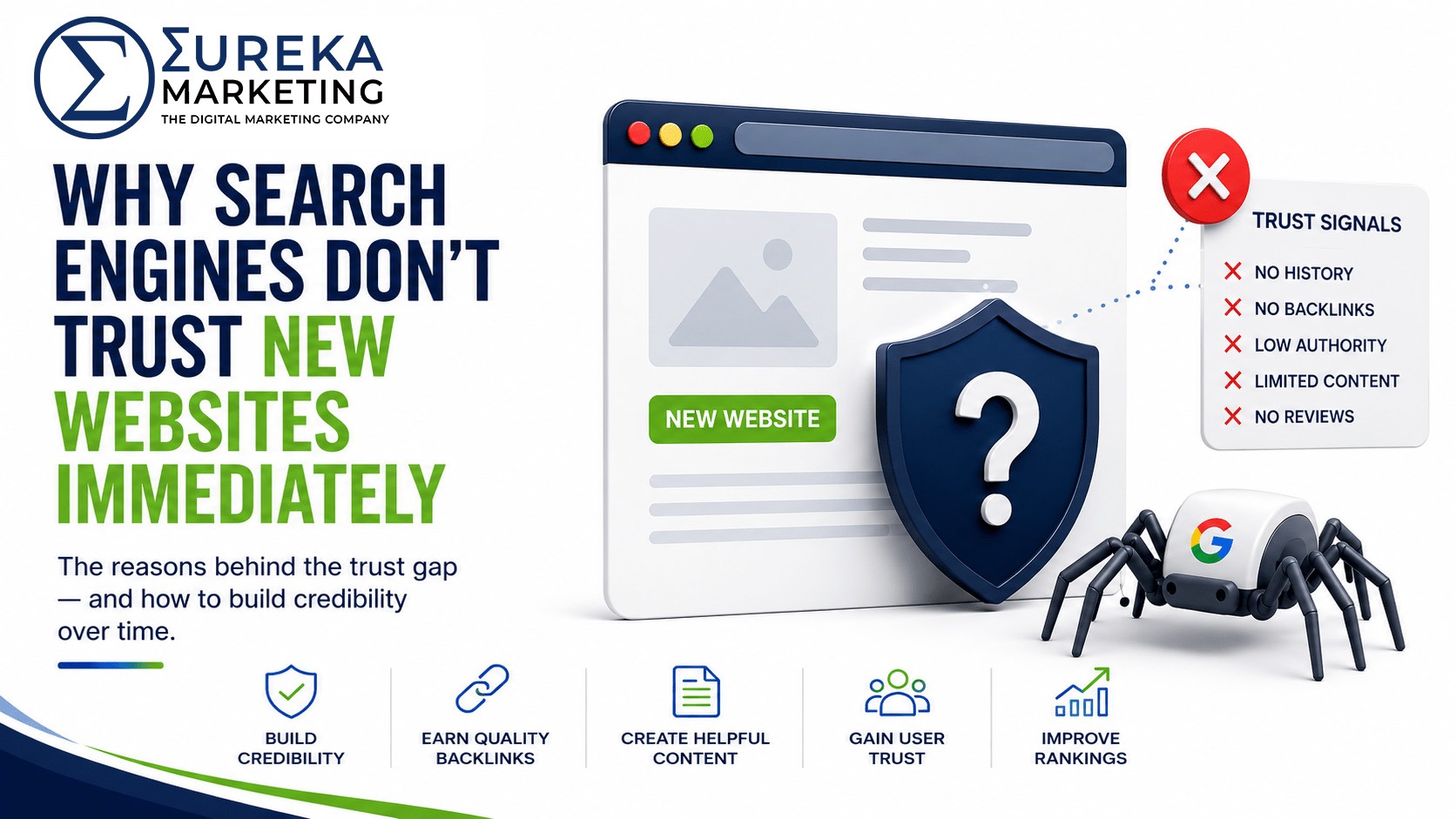
Search engines evaluate new sites based on:
- Domain and entity history
How long the site has existed, how consistently it publishes, and whether it’s associated with a recognised brand or business entity. - Content usefulness and experience
Whether the content demonstrates real-world experience, depth, and originality — not just AI-generated text written for keywords. - Authority signals
Mentions, backlinks, reviews, and brand references across the web that confirm your business is legitimate. - User engagement signals
How users interact with your site: scroll depth, time on page, repeat visits, and whether content satisfies intent.
Until these signals develop, Google’s AI systems are cautious about ranking a new website prominently.
Established Competitors Have Built Authority Over the Years
Most industries are competitive online. Whether you’re a trades business, professional service, or e-commerce brand, your competitors often have years of accumulated trust.
They may already have:
- Large content libraries covering their topic in depth
- Strong backlink profiles and digital PR mentions
- Brand searches and repeat visitors
- Customer reviews and citations reinforcing credibility
In 2026, SEO is less about individual pages and more about topical authority. New websites must prove they deserve to be in the same conversation—and that takes time.
Indexing, Ranking, and AI Evaluation Are Ongoing Processes
When a new site launches, Google doesn’t just crawl it once and decide where it belongs. Pages are continuously evaluated by AI systems that measure user responses.
New pages often go through a ranking-experimentation phase, during which visibility fluctuates as Google gathers data. This is completely normal.
Over time, as engagement improves and content demonstrates value, rankings stabilise and grow.
Backlinks, Brand Mentions, and Trust Signals Build Gradually
Backlinks remain important, but in 2026, they’re part of a wider trust ecosystem. Google looks at:
- Quality backlinks from relevant websites
- Brand mentions (even without links)
- Local citations and directory consistency
- Reviews and third-party validation
These signals rarely appear overnight. Ethical link building, PR coverage, partnerships, and organic mentions take consistent effort.
For local businesses, accurate citations and local relevance are still critical — but they need time to be discovered, indexed, and trusted.
SEO Is a Compounding Strategy, Not an Instant Fix
Unlike paid ads, SEO builds momentum. Each improvement strengthens the next:
- Technical optimisation improves crawlability
- Better content improves engagement
- Engagement reinforces rankings
- Rankings drive traffic and brand searches
- Brand signals improve trust and visibility
For most new websites, a realistic SEO timeline looks like this:
- Months 1–2: Technical SEO, site structure, entity setup, foundational content
- Months 3–4: Impressions increase, early AI Overview visibility, long-tail rankings
- Months 5–6: Consistent traffic growth, stronger local or niche keywords
- Months 6–12: Measurable leads, sales, and brand recognition
Timelines vary by competition and investment, but the principle remains the same: SEO builds value over time.
Why Some New Websites Rank Faster Than Others
Some websites see quicker results because they:
- Operate in low-competition or specialist niches
- Publish high-quality, experience-based content from day one
- Build brand signals early through PR, reviews, and partnerships
- Invest consistently instead of stopping after a few months
On the flip side, sites that rely on thin content, mass AI generation, or outdated SEO shortcuts often struggle — or fail entirely — under modern algorithms.
How Expect More Helps New Websites Succeed
At Expect More Marketing, we help new websites grow visibility the right way — aligned with modern search algorithms and AI-driven discovery.
Our approach focuses on:
- In-depth SEO audits to resolve technical barriers early
- Optimised service and product pages built around real user intent
- Content strategies that establish topical authority and experience
- Ethical link building and brand signal development
- Clear, transparent reporting that shows real progress
We understand that SEO requires patience — but we also know how to accelerate growth without risking penalties or wasted spend.
Final Thoughts
SEO takes time for new websites because trust, authority, and relevance cannot be manufactured instantly. In 2026, search engines rely heavily on AI systems that reward experience, credibility, and genuine usefulness.
For small business owners, the key takeaway is simple:
SEO is not an expense — it’s a long-term investment in visibility, brand strength, and sustainable growth.
With consistent effort and the right strategy, even a brand-new website can earn its place alongside long-established competitors — and turn organic traffic into real customers.