
PPC Services
Paid search campaigns built around better enquiries, not wasted clicks
PPC can be a powerful way to get your business in front of people who are already searching for your products or services. But without the right structure, tracking and landing page journey, it can quickly become expensive.
At Eureka Marketing, we create and manage PPC campaigns with a clear commercial focus: reaching the right people, reducing wasted spend and turning more clicks into genuine enquiries.
More relevant clicks
More enquiries

Better ROI
Collaborative PPC Management
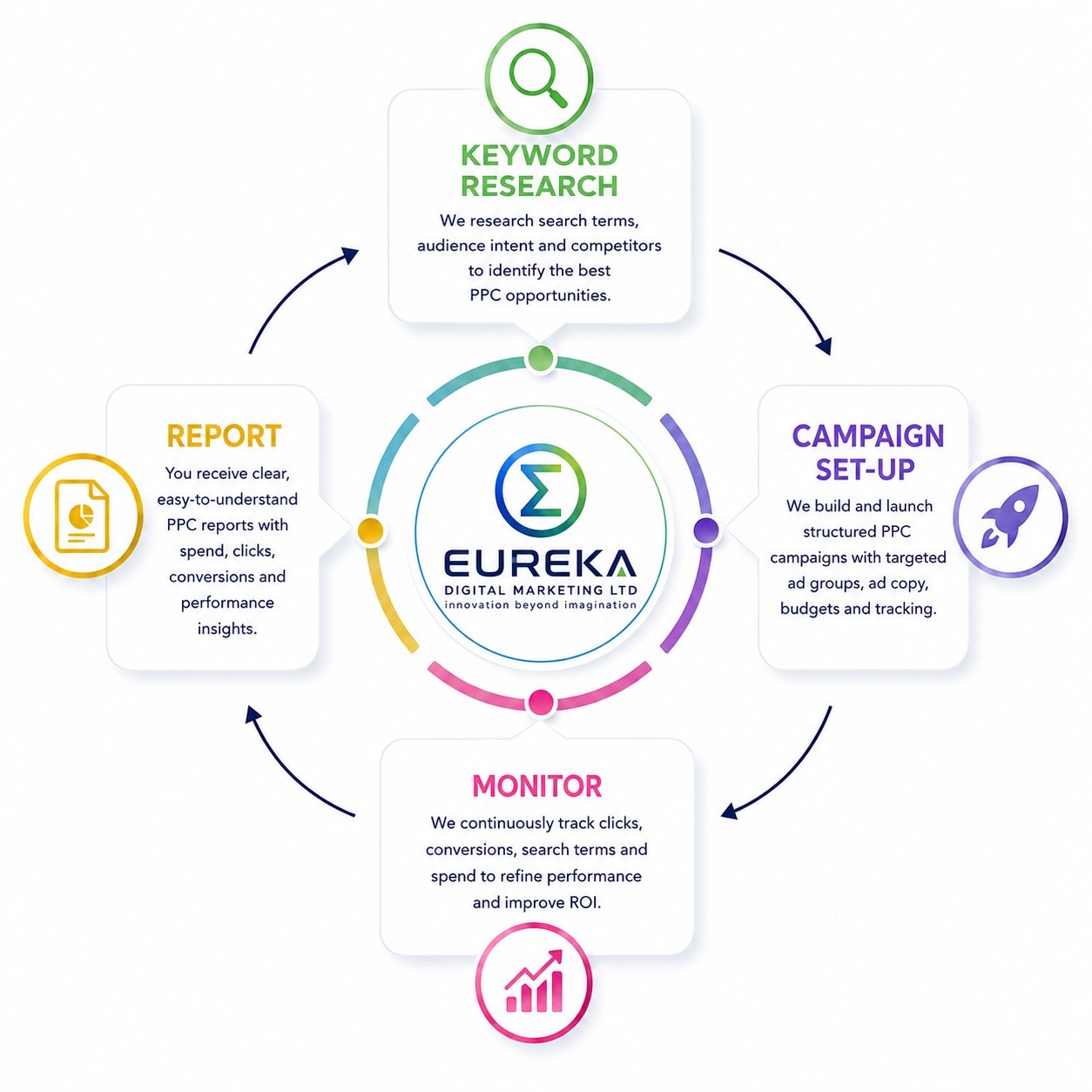
Unlike many PPC providers, we do not just set up campaigns and leave them running. We work with you to understand your business, your target customers, your budget and what a valuable enquiry looks like.
From there, we review the account, apply improvements, monitor performance and report clearly on what is working, what needs changing and where your budget is delivering the best return.
Where Could Your PPC Be Working Harder?
Eureka PPC Services for Business Growth
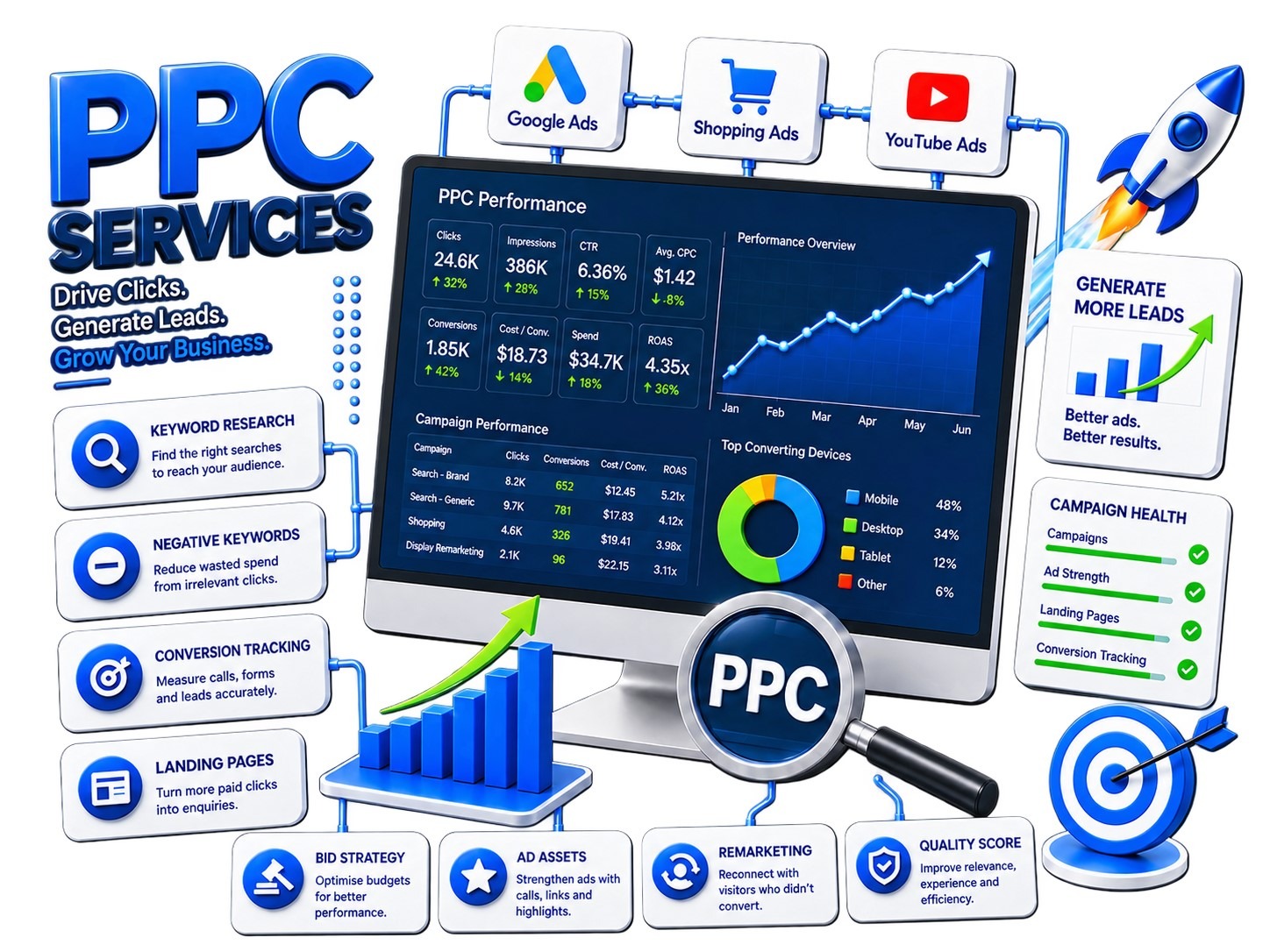
PPC Services
Every business is different, so your PPC strategy should be built around your goals, budget, audience and sales process. Our PPC services are designed to help reduce wasted spend, improve tracking and generate better-quality enquiries from paid search.
Google Ads Management
Search campaigns designed to help your business appear when people are actively looking for your products or services.
PPC Strategy & Set-Up
Campaign planning, keyword research, tracking setup and launch support for new or underperforming Google Ads.
Conversion Tracking
Tracking setup for calls, forms, bookings and key actions so you can understand which campaigns are generating real results for your PPC Campaigns
Landing Page Review
Review and improvement of PPC landing pages to help turn more paid clicks into quality enquiries or sales using clear CTA's and Content.
Let’s Talk About Improving Your PPC Results
Tell us what you are currently running, what you want to achieve and where you feel your PPC could be working harder. We’ll help you understand the best next step, with no obligation and no jargon.

We’re here to help your PPC work harder.
We’ll help you understand where your budget is going, what needs improving and how your campaigns could generate better-quality enquiries.

Response within one working day.
We’ll review your enquiry and come back to you with a practical next step.

Friendly, practical advice.
Straightforward PPC guidance tailored to your goals, budget and current campaigns.

No-obligation PPC review
No pressure. Just a clear conversation about what could be improved.

Prefer to speak now?
PPC Frequently Asked Questions
These FAQs cover some of the more specific areas of PPC, including AI-supported campaign management, ecommerce advertising and Google Shopping Ads. They are useful if you sell products online or want to understand how automation, product feeds and campaign data can support better paid advertising performance.
What is PPC?
PPC stands for pay-per-click. It is a form of online advertising where you usually pay when someone clicks your advert. Google Ads is one of the most common PPC platforms, allowing your business to appear when people search for specific products or services.
Is PPC the same as Google Ads?
Google Ads is a PPC platform, but PPC can also include other paid advertising channels such as Microsoft Ads, Meta Ads, LinkedIn Ads and remarketing. For many businesses, Google Ads is the best starting point because it targets people who are actively searching.
How quickly can PPC generate enquiries?
PPC can start generating traffic soon after campaigns go live, but strong performance usually takes testing and optimisation. The early stage is about collecting data, reviewing search terms, improving adverts and understanding which keywords convert best.
Should I use PPC or SEO?
PPC can generate traffic faster, while SEO builds longer-term organic visibility. Many businesses use both together because PPC can support immediate enquiries while SEO builds a more sustainable search presence over time.
What is Google Ads management?
Google Ads management is the process of planning, setting up, monitoring and improving paid search campaigns. It includes keyword targeting, advert copy, bidding, conversion tracking, negative keywords, landing page review and ongoing optimisation.
Who is Google Ads suitable for?
Google Ads can work well for businesses that want to generate enquiries, phone calls, bookings, quote requests or online sales. It is especially useful when people are already searching for the products or services you offer.
What does Google Ads setup include?
Google Ads setup can include keyword research, campaign structure, ad group creation, advert copywriting, location targeting, budget settings, bidding strategy, negative keywords, conversion tracking and launch checks.
Can Google Ads work for small businesses?
Yes. Google Ads can work for small businesses when campaigns are focused, well tracked and carefully managed. The key is to target the right searches, avoid wasted spend and make sure the landing page gives visitors a clear reason to enquire.
What is involved in PPC campaign set-up?
PPC campaign set-up can include keyword research, account structure, campaign and ad group creation, advert copy, location targeting, budget planning, bidding strategy, negative keywords, conversion tracking and final launch checks.
Why is campaign structure important?
Campaign structure affects how clearly budget, targeting and performance can be managed. A well-structured PPC account makes it easier to see what is working, reduce wasted spend and focus budget on the searches most likely to generate enquiries.
What are negative keywords?
Negative keywords stop your adverts from appearing for irrelevant searches. For example, you may want to exclude searches involving “free”, “jobs” or “training” if those searches are unlikely to become valuable enquiries.
Do you write the adverts?
Yes. PPC set-up can include writing advert copy that matches your services, search intent and target audience. The aim is to make the adverts clear, relevant and focused on generating the right type of click.
Why is conversion tracking important?
Conversion tracking shows which campaigns, keywords and adverts are generating valuable actions such as phone calls, form submissions, bookings or sales. Without tracking, it is difficult to know whether your budget is being spent effectively.
What conversions should I track?
The right conversions depend on your business, but common examples include phone calls, contact form submissions, appointment bookings, quote requests, purchases, downloads and email clicks.
Can you set up tracking for calls and forms?
Yes. We can help set up tracking for important actions such as phone calls, website forms, bookings and other enquiry routes, so PPC performance can be measured more clearly.
What happens if tracking is not set up properly?
If tracking is missing or inaccurate, it becomes much harder to judge performance. You may spend money on campaigns without knowing which clicks are turning into real enquiries or sales.
Do landing pages affect PPC performance?
Yes. A strong landing page can help turn more paid clicks into enquiries or sales. If the page is unclear, slow, difficult to use or missing trust signals, you may pay for traffic but lose potential customers before they take action.
What makes a good PPC landing page?
A good PPC landing page should match the advert, explain the offer clearly, build trust quickly and make the next step easy. It should include strong headings, clear calls to action, contact options, reviews or proof points and a simple enquiry route.
Can you review my landing pages?
Yes. Landing page review is an important part of PPC management because improving the page can help increase conversion rates and make better use of your advertising spend.
Do I need a separate landing page for PPC?
Not always, but it can help. Dedicated landing pages are useful when you want the message, offer and call to action to match a specific campaign more closely than a general website page.
How much should I spend on PPC?
The right PPC budget depends on your industry, competition, location, goals and expected return. A small local campaign may need a lower budget, while competitive sectors or wider targeting usually need more investment to generate enough useful data.
Is PPC expensive?
PPC can be expensive if campaigns are poorly targeted or unmanaged. With the right structure, tracking and optimisation, the focus should be on cost per enquiry, cost per sale and return on spend rather than just the cost of each click.
Can PPC guarantee leads?
No PPC agency can honestly guarantee a specific number of leads because results depend on demand, competition, budget, landing pages, pricing, reputation and your sales process. Good PPC management improves your chances by reducing waste and focusing spend on the right searches.
How do you improve PPC return on investment?
PPC return can be improved by refining keywords, adding negative keywords, improving advert copy, adjusting bids, improving landing pages, tracking conversions accurately and moving budget towards the campaigns that generate the best results.
What should a PPC report include?
A good PPC report should explain what has been spent, what results have been generated and what actions are being taken to improve performance. It should include clear data such as clicks, conversions, cost per conversion, spend and campaign performance.
How often should PPC campaigns be reviewed?
PPC campaigns should be reviewed regularly. Ongoing optimisation may include checking search terms, adding negative keywords, testing adverts, adjusting budgets, reviewing bids and improving landing pages.
What happens if a campaign is not performing?
If a campaign is not performing, the first step is to identify where the issue is. It could be targeting, budget, search intent, advert copy, tracking, landing page quality or the offer itself. Once the problem is clear, the campaign can be adjusted and tested properly.
Will I understand the reports?
Yes. PPC reporting should be clear and focused on business outcomes, not just technical metrics. The aim is to help you understand what your budget is doing and where improvements are being made.
Can AI tools like ChatGPT help with PPC campaigns?
Yes. AI tools can support PPC planning by helping with advert ideas, keyword themes, landing page messaging, audience research and content variations. However, AI should not replace proper campaign strategy, data analysis or human judgement. PPC still needs accurate tracking, careful budget control and regular optimisation.
Do you use AI when managing PPC campaigns?
Where appropriate, we can use AI to support research, idea generation, advert testing and content planning. The important part is how it is used. AI can help speed up parts of the process, but campaign decisions should still be based on search intent, performance data, business goals and commercial value.
Can AI improve Google Ads performance?
AI can help improve PPC performance when it is used alongside strong campaign structure and accurate tracking. It may support bidding, advert testing, keyword expansion and performance analysis, but it still needs clear goals, good data and regular human review to avoid wasted spend.
Should I let Google Ads automation run everything?
Not without proper oversight. Google Ads automation can be useful, especially for bidding and campaign optimisation, but it needs the right setup, conversion tracking, budgets and exclusions. Without monitoring, automated campaigns can spend money in areas that do not generate the right type of enquiry or sale.
What is Ecommerce PPC?
Ecommerce PPC is paid advertising designed to drive shoppers to product or category pages and generate online sales. It can include Google Shopping Ads, search campaigns, Performance Max, remarketing and paid social campaigns depending on the products, margins and target audience.
How is Ecommerce PPC different from lead generation PPC?
Lead generation PPC focuses on enquiries, phone calls, forms or bookings. Ecommerce PPC focuses more directly on product visibility, sales, average order value, return on ad spend and product-level performance. It also needs strong product feeds, clear pricing, good product pages and accurate ecommerce tracking.
What does Ecommerce PPC management include?
Ecommerce PPC management can include product feed review, Shopping Ads setup, campaign structure, search campaigns, Performance Max campaigns, remarketing, conversion tracking, product performance analysis, budget optimisation and reporting on revenue, sales and return on ad spend.
Can PPC help increase ecommerce sales?
Yes. PPC can help ecommerce businesses reach shoppers who are actively searching for products, brands or categories. The key is to focus budget on the products and campaigns most likely to generate profitable sales, not just traffic.
What are Google Shopping Ads?
Google Shopping Ads are product-based adverts that can appear in Google search results and shopping placements. They usually show a product image, title, price, retailer name and other product details, helping shoppers compare options before clicking through to buy.
What do I need to run Shopping Ads?
To run Shopping Ads, you usually need an ecommerce website, a product feed, a Google Merchant Center account, Google Ads account setup and accurate conversion tracking. Your product data also needs to be clear, accurate and compliant with Google’s requirements.
Why is the product feed important for Shopping Ads?
The product feed tells Google what products you sell, including titles, descriptions, images, prices, availability and product categories. A poor feed can limit visibility, waste budget or cause products to be disapproved. A strong feed helps Google understand when your products should appear.
Are Shopping Ads right for every ecommerce business?
Not always. Shopping Ads work best when products are clearly priced, competitively presented and supported by strong product pages. They may be less effective if margins are too low, delivery costs are unclear, product data is weak or the website does not convert visitors well.