On-Page SEO
On-Page SEO Services That Improve Your Website Pages
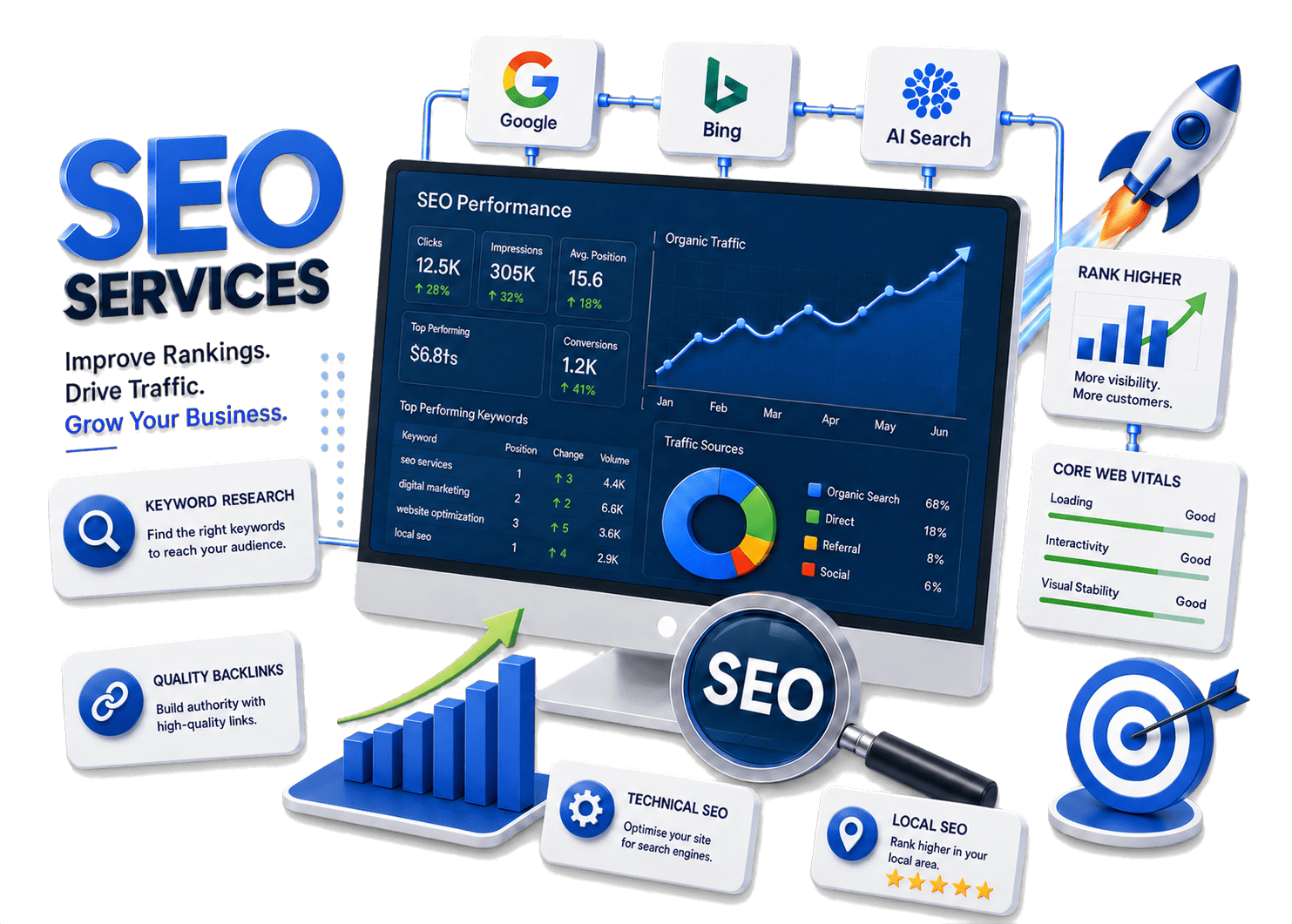
On-Page SEO services designed to improve your page content, headings, metadata, internal links and calls to action, helping search engines understand your pages and users take the next step.
More visibility
More traffic
More enquiries
On-Page SEO Built Around Your Business Goals
On-Page SEO is not about adding keywords for the sake of it. It is about making your key website pages clearer, more useful and more focused on the people you want to attract.
At Eureka Marketing, we review how each important page is structured, what it says, how it supports search intent and whether it gives visitors a clear reason to contact you.
What Can On-Page SEO Improve?
Explore Our Other SEO Services
On-Page SEO Support for Better Website Performance
Every website has pages that matter more than others. These may be service pages, location pages, product pages or landing pages that are responsible for generating enquiries.
Our On-Page SEO support focuses on improving those pages so they are clearer, more relevant and better aligned with what your customers are searching for.
Local SEO
When your website needs to be found
National SEO
For brands and businesses that require national reach.
Technical SEO
Technical SEO is the foundations of a good website, it’s concerned with how your website is put together
Ecommerce SEO
Product-specific SEO for improved ecommerce performance
Not sure whether your website pages are doing enough? We can review your key pages and show you where clearer content, stronger structure, better metadata and improved calls to action could help generate more enquiries.
Let's Talk About Growing Your Business
Tell us what you would like to achieve and we'll recommend the best next step.
No obligation. No jargon. Just a helpful conversation about your business goals.
We're here to help your business grow.

Response within one working day.
We'll review your enquiry and get back to you quickly.
Friendly, practical advice.
Straightforward guidance tailored to your business goals.
No-obligation conversation
Totally no pressure. Just explore what's possible.
Prefer to speak now?
01276 582169
On-Page Frequently Asked Questions
Select a topic or question
What is On-Page SEO?
On-Page SEO is the process of improving individual pages on your website so they are clearer, more relevant and easier for search engines and users to understand. It includes the visible elements of a page, such as headings, page copy, links, images and calls to action, as well as key SEO elements like meta titles and descriptions.
Why is On-Page SEO important?
On-Page SEO helps Google understand what each page is about and why it should appear for relevant searches. It also helps visitors quickly understand your services, trust your business and take the next step, such as calling, booking or sending an enquiry.
How is On-Page SEO different from Technical SEO?
Technical SEO focuses on how your website works behind the scenes, including speed, crawlability, indexing and redirects. On-Page SEO focuses on the content and structure of the page itself, including keywords, headings, copy, internal links and user experience.
Which pages should be optimised first?
The most important pages should usually be optimised first. These often include your homepage, main service pages, location pages, high-traffic pages and any pages that are important for generating enquiries, bookings or sales.
What is a meta title?
A meta title is the page title that can appear in Google search results and browser tabs. It helps search engines and users understand what the page is about and can influence whether someone clicks through to your website.
What is a meta description?
A meta description is the short summary that can appear underneath the title in Google search results. It does not directly guarantee rankings, but a clear and relevant description can help improve click-throughs from people who are comparing search results.
Why do meta titles and descriptions matter?
Meta titles and descriptions matter because they help position your page in search results. A strong title can improve relevance, while a compelling description can encourage more people to click through to your website instead of a competitor.
Should every page have unique metadata?
Yes. Each important page should have its own unique meta title and description. Duplicate or generic metadata can make it harder for search engines and users to understand the difference between your pages.
Why are headings important for On-Page SEO?
Headings help organise the page and make the content easier to scan. They also help search engines understand the main topics covered on the page, especially when H1s, H2s and H3s are used clearly and logically.
What is an H1 tag?
An H1 tag is usually the main heading of a page. It should clearly describe the main subject of the page and should normally only be used once on each page to avoid confusion.
Do keywords still matter for On-Page SEO?
Yes, but they need to be used naturally. Modern SEO is less about repeating keywords and more about matching search intent, answering the right questions and making sure the page is clearly focused on the topic people are searching for.
What is keyword intent?
Keyword intent is the reason behind a search. For example, someone may be looking for information, comparing providers or ready to make an enquiry. Good On-Page SEO makes sure the page matches what the searcher actually wants.
What makes good on-page content?
Good on-page content is clear, useful and focused on the needs of the visitor. It should explain what you offer, who it is for, why it matters and what someone should do next, while also helping search engines understand the topic of the page.
How much content does a page need?
There is no fixed word count that works for every page. The right amount depends on the topic, competition and search intent. A page should have enough useful content to answer key questions and support the user’s decision without becoming repetitive or bloated.
Can thin content affect SEO?
Yes. Thin content can make it harder for a page to rank because it may not give search engines or users enough information. Pages with very little detail, duplicated wording or unclear purpose often need strengthening
Should old content be updated?
Yes. Old or outdated content can reduce trust and weaken performance. Updating pages with clearer information, better structure, improved calls to action and more relevant answers can help support both rankings and enquiries.
What are internal links?
Internal links are links from one page of your website to another. They help users move through the site and help search engines understand how your pages connect to each other.
Why is internal linking important for On-Page SEO?
Internal linking helps guide visitors to useful pages and helps search engines discover, crawl and understand your content. It can also help show which pages are most important within your website structure.
What pages should I link to internally?
You should link to pages that genuinely help the user, such as related services, relevant location pages, helpful guides, case studies, contact pages or enquiry pages. The aim is to make the journey easier, not to add links for the sake of it.
Can poor internal linking hurt SEO?
Yes. If important pages are difficult to find or have very few internal links, search engines may treat them as less important. Poor linking can also make it harder for users to find the information they need before making an enquiry.
Can On-Page SEO improve enquiries?
Yes. Good On-Page SEO is not just about rankings. It can also improve how visitors understand your offer, build trust and move towards taking action, such as calling, submitting a form or booking a consultation.
What conversion elements should be reviewed?
Important conversion elements include headings, page copy, calls to action, contact buttons, forms, trust signals, testimonials, service explanations, pricing guidance, page layout and the overall journey from landing on the page to making an enquiry.
Why do calls to action matter?
Calls to action help guide visitors towards the next step. If a page does not clearly tell people what to do next, they may leave without contacting you, even if they are interested in your service.
How do you know if On-Page SEO is working?
On-Page SEO can be measured through keyword visibility, organic traffic, engagement, enquiries, calls, form submissions and conversion rates. The aim is not just to attract more visitors, but to attract the right visitors and encourage them to take action.