

Content SEO
Content SEO Services That Help Your Website Attract and Convert Better Traffic
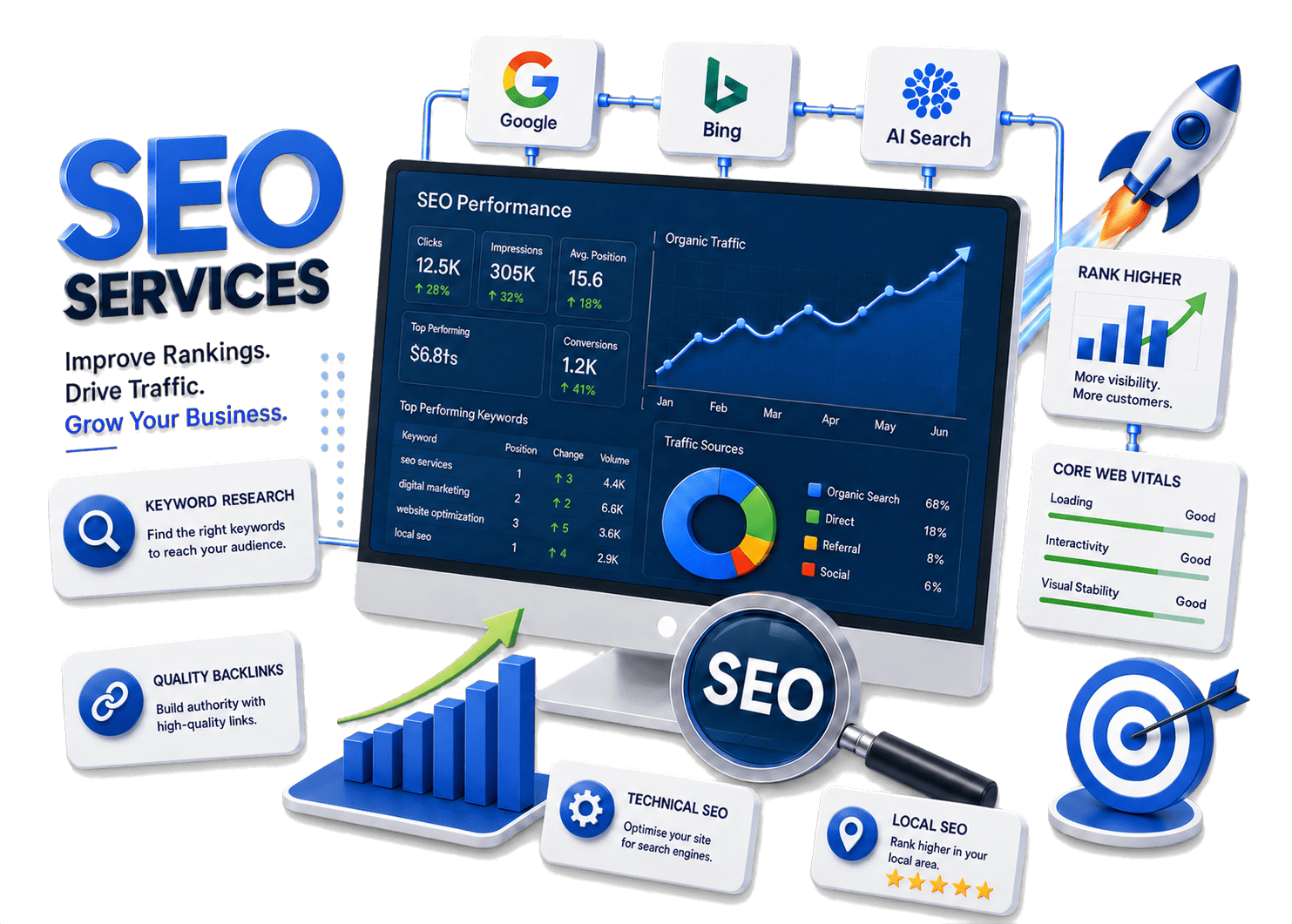
Content SEO services designed to strengthen your service pages, blogs, FAQs and website content so your business can attract better-quality traffic and generate more enquiries.

More visibility

More traffic

More enquiries
Content SEO Built Around What Your Customers Search For
Content SEO is not about writing content for the sake of it. It is about understanding what your customers are searching for, what questions they need answered and what information helps them decide whether to contact you.
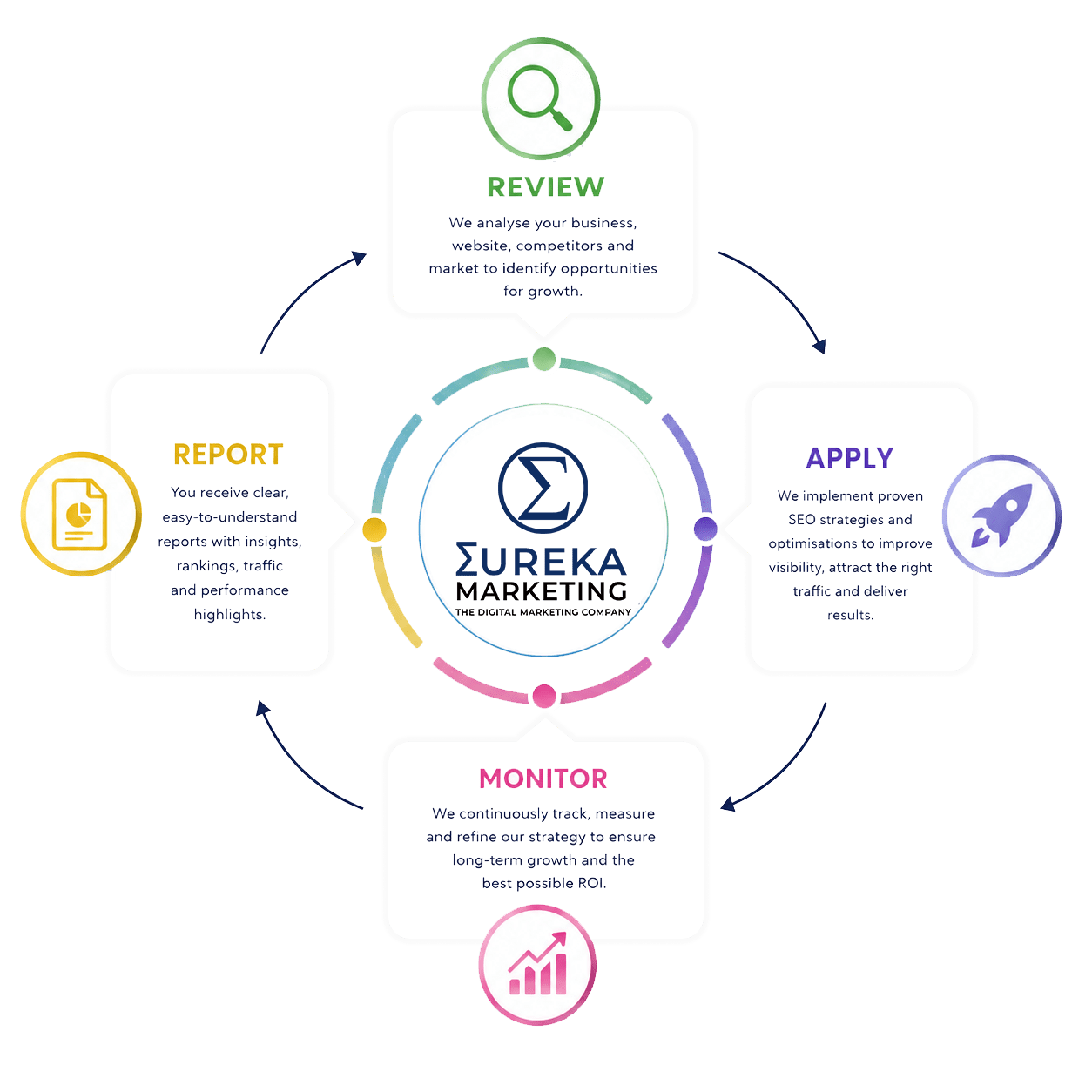
At Eureka Marketing, we plan and improve website content around your services, audience and business goals. That means stronger service pages, clearer FAQs, useful guides and content that supports both search visibility and enquiries.
What Can Content SEO Improve?

Explore Our Other SEO Services
Content That Supports Search Visibility and Enquiries
Your website content should do more than fill space. It should explain your services clearly, answer the questions your customers are asking and guide visitors towards making an enquiry.
Our Content SEO support focuses on improving the pages that matter most, identifying content gaps and creating a clearer structure for long-term organic growth.

Local SEO
When your website needs to be found
National SEO
For brands and businesses that require national reach.

Technical SEO
Technical SEO is the foundations of a good website, it’s concerned with how your website is put together

Ecommerce SEO
Product-specific SEO for improved ecommerce performance
Let's Talk About Growing Your Business
Tell us what you would like to achieve and we'll recommend the best next step.
No obligation. No jargon. Just a helpful conversation about your business goals.

We're here to help your business grow.

Response within one working day.
We'll review your enquiry and get back to you quickly.

Friendly, practical advice.
Straightforward guidance tailored to your business goals.

No-obligation conversation
Totally no pressure. Just explore what's possible.

Prefer to speak now?
01276 582169

Content SEO Frequently Asked Questions
Select a topic or question
What is Content SEO?
Content SEO is the process of planning, creating and improving website content so it matches what your customers are searching for. It helps search engines understand your services and helps visitors find useful information before they make an enquiry.
Why is Content SEO important?
Content SEO is important because your website needs clear, relevant and helpful content to compete in search results. Good content can improve visibility, build trust, answer customer questions and encourage more people to contact your business.
How is Content SEO different from general copywriting?
General copywriting focuses on making content read well and communicate clearly. Content SEO also considers search intent, keyword opportunities, page structure, internal linking, headings and how the content supports rankings, traffic and enquiries.
What types of businesses need Content SEO?
Any business that relies on its website to generate visibility, enquiries or sales can benefit from Content SEO. It is especially useful for service-based businesses, ecommerce websites, professional services, local businesses and companies with outdated or underperforming website content.
What is keyword research?
Keyword research is the process of identifying the words and phrases people use when searching for your products, services or expertise. It helps shape the content strategy so your website targets the searches most relevant to your business.
What is search intent?
Search intent is the reason behind a search. Someone may be looking for information, comparing options, searching locally or ready to make an enquiry. Good Content SEO makes sure each page matches what the searcher actually needs.
Do keywords still matter for Content SEO?
Yes, but they need to be used naturally. Modern SEO is not about repeating keywords as many times as possible. It is about choosing the right topics, answering the right questions and making each page clearly relevant to the search.
Can the wrong keywords attract the wrong visitors?
Yes. If your content targets keywords that do not match your services or audience, you may attract visitors who are unlikely to enquire or buy. A good content strategy focuses on relevance, intent and commercial value, not just search volume.
Why are service pages important for Content SEO?
Service pages are often the pages that explain what your business does and help turn visitors into enquiries. Strong service page content helps Google understand your services and helps potential customers decide whether you are the right business to contact.
What should a good service page include?
A good service page should clearly explain the service, who it is for, the problems it solves, why it matters, what makes your business different and what the visitor should do next. It should also include clear headings, helpful answers and strong calls to action.
Can thin service pages affect SEO?
Yes. Thin service pages with very little useful information can make it harder for Google to understand the page and harder for customers to make a decision. Strengthening service pages is often one of the most important Content SEO improvements.
Should every service have its own page?
In many cases, yes. If a service is important to your business and people search for it separately, it usually deserves its own page. This allows the content to be more specific, relevant and useful for both search engines and users.
Do I need a blog for SEO?
Not every business needs to start with a blog. For many websites, improving the main service pages should come first. Blog content becomes useful when it supports the wider SEO strategy by answering customer questions, targeting longer searches and building topical authority.
What should blog content be about?
Blog content should be based on what your customers actually want to know. Useful topics may include common questions, comparisons, buying advice, service explanations, problem-solving guides and helpful information that supports your main services.
How often should I publish blog content?
There is no fixed rule. Quality and relevance matter more than publishing for the sake of it. A smaller number of useful, well-planned articles is usually better than frequent content that does not support your business goals.
Can blog content generate enquiries?
Yes, when it is planned properly. Blog content can attract people earlier in their decision-making journey, build trust and guide them towards relevant service pages, contact forms or calls to action.
What makes website content high quality?
High-quality website content is clear, useful, accurate and relevant to the reader. It should answer real questions, explain your services properly, build trust and make it easy for visitors to understand what to do next.
Why does page structure matter for Content SEO?
Page structure helps both users and search engines understand the content. Clear headings, short sections, internal links, FAQs and calls to action make the page easier to read, easier to scan and easier to interpret.
Can old content harm SEO?
Yes. Old, outdated or irrelevant content can weaken trust and reduce performance, especially if it no longer reflects your services, pricing, locations, expertise or customer needs. Reviewing and updating content helps keep the website accurate and useful.
Should content be written for Google or for customers?
Content should be written for customers first, but structured in a way that search engines can understand. The best Content SEO balances helpful, natural writing with clear headings, relevant keywords and a logical page structure.
How do you know which content needs improving?
Content can be reviewed using search performance, rankings, traffic, enquiries, engagement, keyword gaps, competitor comparisons and how well the page answers customer questions. Pages with poor visibility or low conversion value may need updating.
Is it better to create new content or improve existing pages?
It depends on the website. In many cases, improving existing pages is the best starting point because they may already have some authority or visibility. New content should be created when there is a clear gap or opportunity.
How does internal linking help Content SEO?
Internal linking helps connect related pages, guide users to useful information and show search engines which pages are important. Good internal links can support service pages, location pages, blogs and enquiry pages.
How is Content SEO measured?
Content SEO can be measured through organic traffic, keyword visibility, page engagement, enquiries, calls, form submissions, assisted conversions and the number of relevant searches the website begins to appear for over time.