

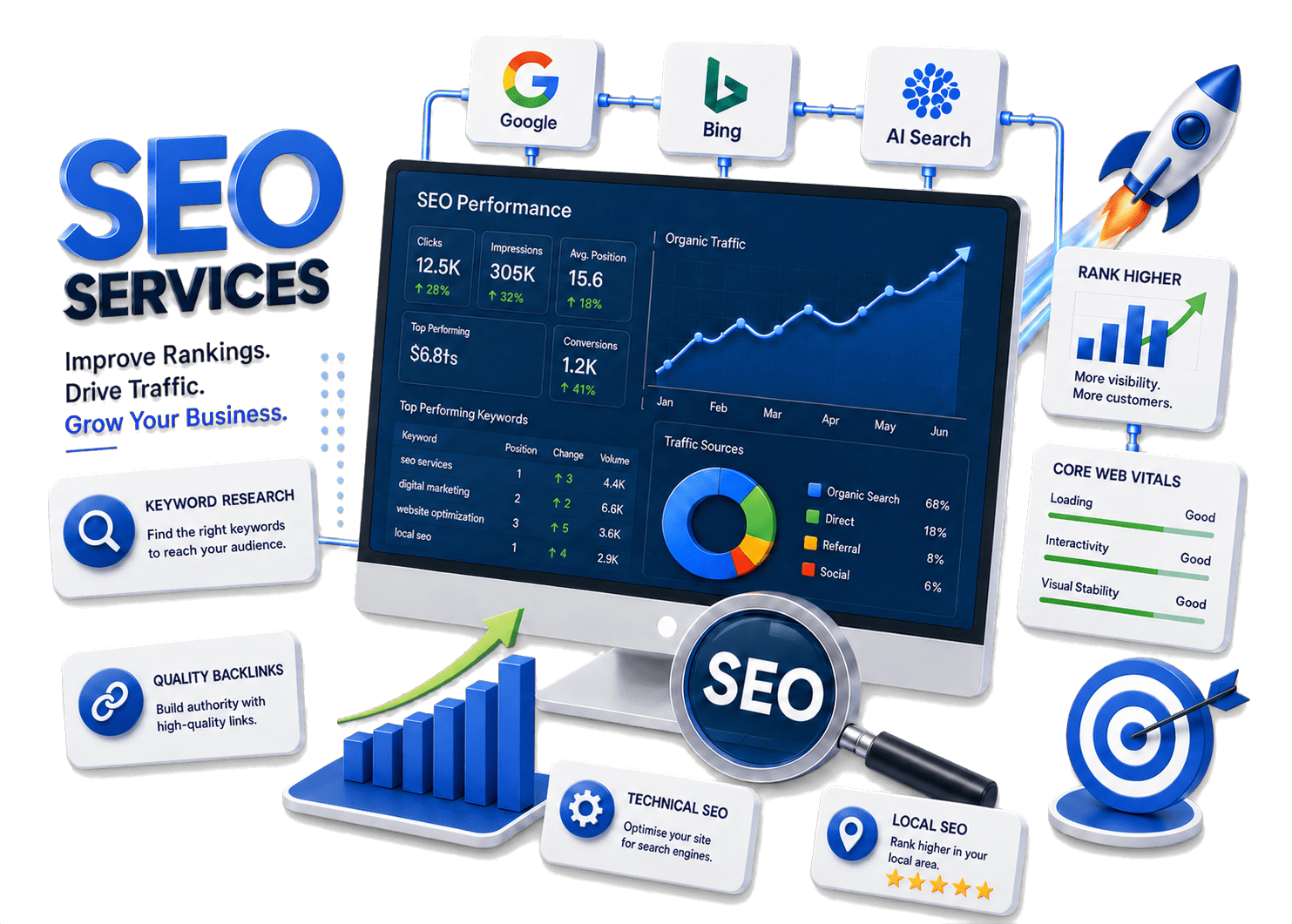
Ecommerce SEO Services
Ecommerce SEO Services That Help More Customers Find and Buy Your Products
Ecommerce SEO services designed to improve product visibility, strengthen category pages, attract better-quality shoppers and help turn more organic traffic into sales.

More visibility

More traffic

More enquiries
Ecommerce SEO Built Around Products, Categories and Sales
Ecommerce SEO is not just about getting more traffic to your online shop. It is about helping the right customers find the right products, understand why they should buy from you and move smoothly from search to checkout.
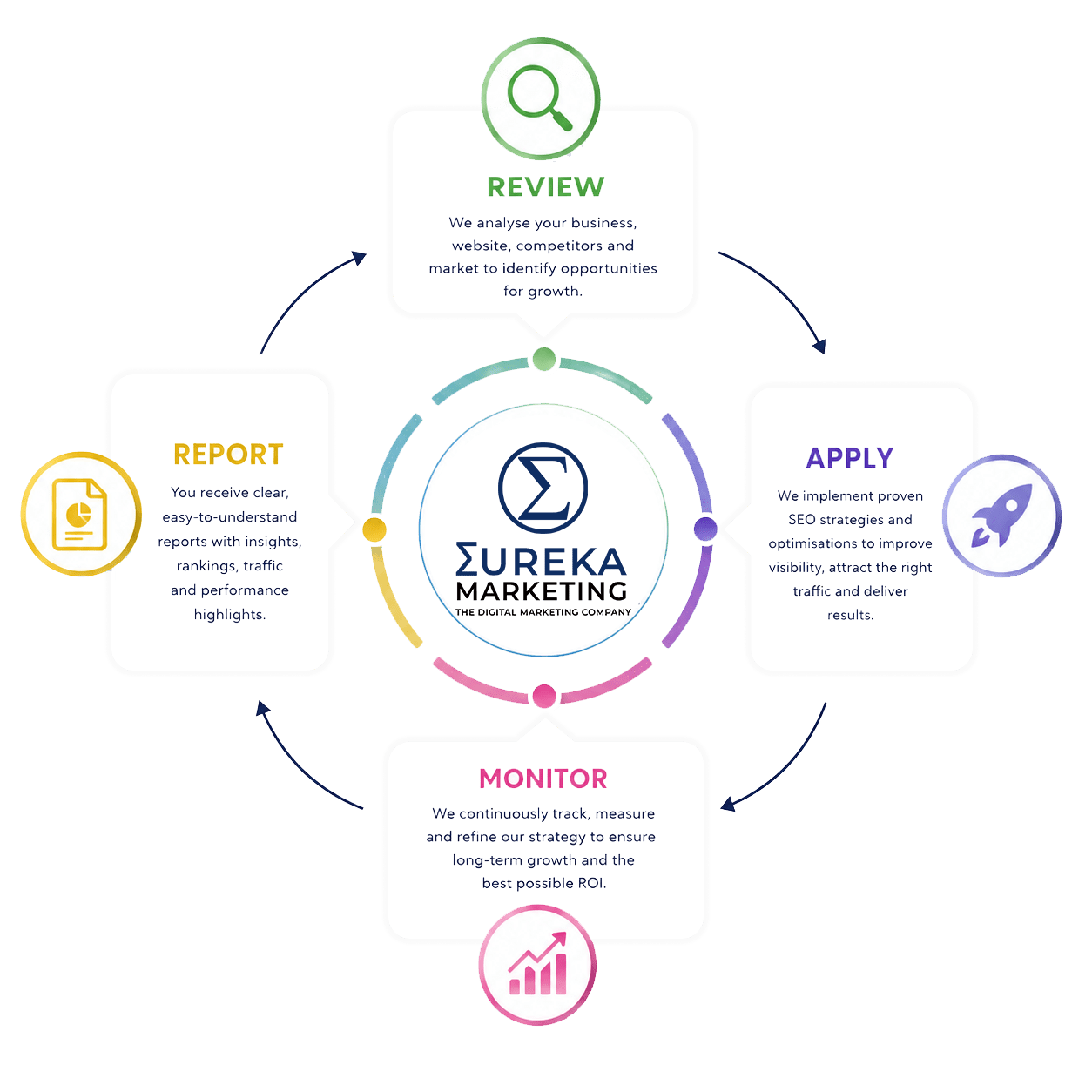
At Eureka Marketing, we review how your product pages, category pages, site structure, content and technical setup support organic sales. The aim is to improve visibility for the searches that matter and make it easier for customers to find, compare and buy your products.
What Can Ecommerce SEO Improve?

Σureka SEO services for business growth
Ecommerce SEO That Supports Online Sales
Your online shop needs more than traffic. It needs the right customers landing on the right products and categories, with clear information that helps them make a buying decision.
Our Ecommerce SEO support focuses on improving product visibility, strengthening category pages, fixing technical barriers and helping your website turn more organic visitors into customers.

Local SEO
When your website needs to be found

National SEO
For brands and businesses that require national reach.
Technical SEO
Technical SEO is the foundations of a good website, it’s concerned with how your website is put together

Ecommerce SEO
Product-specific SEO for improved ecommerce performance
Let's Talk About Growing Your Business
Tell us what you would like to achieve and we'll recommend the best next step.
No obligation. No jargon. Just a helpful conversation about your business goals.

We're here to help your business grow.

Response within one working day.
We'll review your enquiry and get back to you quickly.

Friendly, practical advice.
Straightforward guidance tailored to your business goals.

No-obligation conversation
Totally no pressure. Just explore what's possible.

Prefer to speak now?
01276 582169

Ecommerce SEO Frequently Asked Questions
Select a topic or question
What is Ecommerce SEO?
Ecommerce SEO is the process of improving an online shop so its products and categories can appear more prominently in search engines. The aim is to attract people who are actively searching for what you sell and help turn more of that organic traffic into sales.
Why is Ecommerce SEO important?
Ecommerce SEO helps your products get found without relying only on paid advertising. A well-optimised online shop can attract better-quality visitors, improve product visibility, support trust and generate more sales over time.
How is Ecommerce SEO different from normal SEO?
Ecommerce SEO focuses heavily on product pages, category pages, filters, product descriptions, stock status, reviews, internal linking and checkout journeys. It still needs good technical SEO and content, but the goal is usually more focused on sales and revenue.
What types of online shops need Ecommerce SEO?
Any ecommerce website that wants to generate more organic sales can benefit from Ecommerce SEO. It is useful for small online shops, growing product brands, WooCommerce stores, Shopify websites and larger ecommerce websites with multiple products or categories.
Why are product pages important for Ecommerce SEO?
Product pages are where customers decide whether to buy. Strong product pages help search engines understand what each product is and help customers compare features, benefits, pricing, delivery information and reasons to purchase.
What should an optimised product page include?
An optimised product page should include a clear product title, useful description, product specifications, images, pricing, availability, delivery information, reviews, internal links, clear calls to action and relevant structured data where appropriate.
Can duplicate product descriptions affect SEO?
Yes. If many products use the same copied manufacturer descriptions or duplicated wording, it can make it harder for search engines to understand which pages are valuable. Unique and useful product descriptions can help improve relevance and trust.
Do product reviews help Ecommerce SEO?
Product reviews can support Ecommerce SEO by adding useful customer-led content to product pages. They can help build trust, answer buyer concerns and provide fresh information that supports the buying decision.
What technical issues affect ecommerce websites?
Category pages are often some of the most valuable SEO pages on an ecommerce website because they can target broader commercial searches. They help customers browse product ranges and help search engines understand the structure of your store.
What should a category page include?
A good category page should include a clear heading, helpful introductory content, relevant product listings, filters, internal links, useful descriptions, buying guidance and clear routes to important subcategories or products.
Should category pages have written content?
Yes, but it should be useful and not get in the way of shopping. A short, helpful introduction and supporting content can improve relevance while still keeping the products easy to browse.
Can category pages rank better than product pages?
Yes. Category pages often rank well for broader searches, while product pages may rank for more specific product or brand searches. A good Ecommerce SEO strategy usually improves both.
What is Technical SEO?
Technical SEO looks at how well your website works behind the scenes. It focuses on areas such as site speed, mobile performance, crawlability, indexation, redirects, broken links, duplicate content and structured data.
Why is Technical SEO important?
Technical issues can stop search engines from properly accessing, understanding or ranking your pages. A technically healthy website gives your SEO content a stronger foundation and helps users move around the site more easily.
What does a Technical SEO review include?
A technical SEO review can include checks for site speed, mobile usability, broken links, redirects, crawl errors, indexation problems, duplicate pages, metadata issues, sitemap setup, schema and Google Search Console errors.
How often should Technical SEO be reviewed?
Technical SEO should be reviewed regularly, especially after website updates, redesigns, plugin changes, new page launches or migrations. For active websites, a monthly or quarterly technical check is usually sensible.
What technical issues affect ecommerce websites?
Common ecommerce technical issues include duplicate content, filter and faceted navigation problems, slow page speed, crawl waste, broken links, out-of-stock product pages, poor mobile usability, missing schema and weak internal linking.
Why do filters cause SEO problems?
Filters can create many URL variations that search engines may crawl unnecessarily. If not managed properly, this can lead to duplicate content, wasted crawl budget and confusion about which pages should appear in search results.
How should out-of-stock products be handled?
It depends on whether the product is temporarily unavailable, permanently discontinued or replaced by another product. The right approach may include keeping the page live, adding alternatives, using redirects or improving the page messaging.
Why is page speed important for ecommerce websites?
Page speed matters because slow ecommerce pages can frustrate shoppers and reduce sales. Faster pages can improve user experience, support search performance and make it easier for customers to browse and complete a purchase.
What content does an ecommerce website need?
An ecommerce website may need product descriptions, category content, buying guides, FAQs, comparison content, delivery information, size guides, care guides and helpful content that answers customer questions before purchase.
Do ecommerce websites need blog content?
Not always, but blog content can help when it supports product discovery and buyer decisions. Useful articles, guides and comparisons can attract shoppers earlier in their search journey and link them towards relevant products or categories.
Why is internal linking important for Ecommerce SEO?
Internal linking helps customers and search engines move through your store. Good links can connect products, categories, guides and best-selling items, making it easier for users to find what they need and easier for search engines to understand your site.
What are buying guides?
Buying guides are helpful content pieces that explain how to choose the right product. They can support Ecommerce SEO by answering customer questions, building trust and guiding shoppers towards relevant categories or products.
Can Ecommerce SEO improve sales?
Yes. Ecommerce SEO can improve sales by attracting more relevant shoppers, improving product and category visibility, strengthening trust signals and making it easier for visitors to find and buy the right products.
Why does user experience matter for Ecommerce SEO?
User experience matters because search traffic only has value if visitors can use the website easily. Clear navigation, fast pages, helpful filters, strong product information and a simple checkout journey can all support better sales.
What trust signals matter for ecommerce websites?
Important trust signals include reviews, secure checkout, delivery information, returns policy, payment options, customer support details, product guarantees, clear contact information and professional product imagery.
Should SEO focus on traffic or revenue?
For ecommerce websites, SEO should focus on revenue, not just traffic. More visitors are useful, but the real aim is to attract shoppers who are likely to browse, compare and buy.
How do you measure Ecommerce SEO performance?
Ecommerce SEO can be measured through organic traffic, product visibility, category rankings, sales, revenue, conversion rate, average order value, assisted conversions and engagement from organic visitors.
How long does Ecommerce SEO take to work?
Ecommerce SEO usually takes time because product pages, category pages, technical issues and content improvements need to be crawled and understood by search engines. Some improvements can appear within a few months, but stronger results build over time.
Is Ecommerce SEO a one-off task?
No. Ecommerce websites change regularly as products, stock, categories, prices and customer behaviour change. Ongoing SEO helps keep the site technically healthy, relevant and aligned with new opportunities.
What happens after the first Ecommerce SEO improvements?
After the initial improvements, ongoing work may include improving more products and categories, fixing technical issues, adding helpful content, strengthening internal links, reviewing performance and refining the strategy based on sales and search data.